
Food & culture
Traditional Kyrgyz food reflects our nomadic roots, with plenty of meat, dairy and filling dishes. But the food you’ll find today also reflects the Uzbek, Dungan, Uyghur, Russian and other communities who call Kyrgyzstan home.
If you’re vegetarian or vegan, you can still enjoy travelling here. The important part is explaining your needs clearly and arranging mountain meals in advance.
-
These are some names you’re likely to see on menus:
Beshbarmak: boiled meat served with thin noodles and an onion broth or sauce. Closely associated with hospitality and special occasions.
Kuurdak: fried meat and onions, often with potatoes.
Shorpo: a warming meat broth with vegetables.
Manty: steamed dumplings, commonly filled with meat and onion. Pumpkin, potato or greens-based versions may also be available.
Oromo: a steamed roll of thin dough with a savoury filling, sliced for serving. Fillings can include meat or vegetables.
Lagman: noodles with vegetables and usually meat, served in different styles, including soupy and stir-fried versions.
Plov: rice cooked with carrots, onions and usually meat.
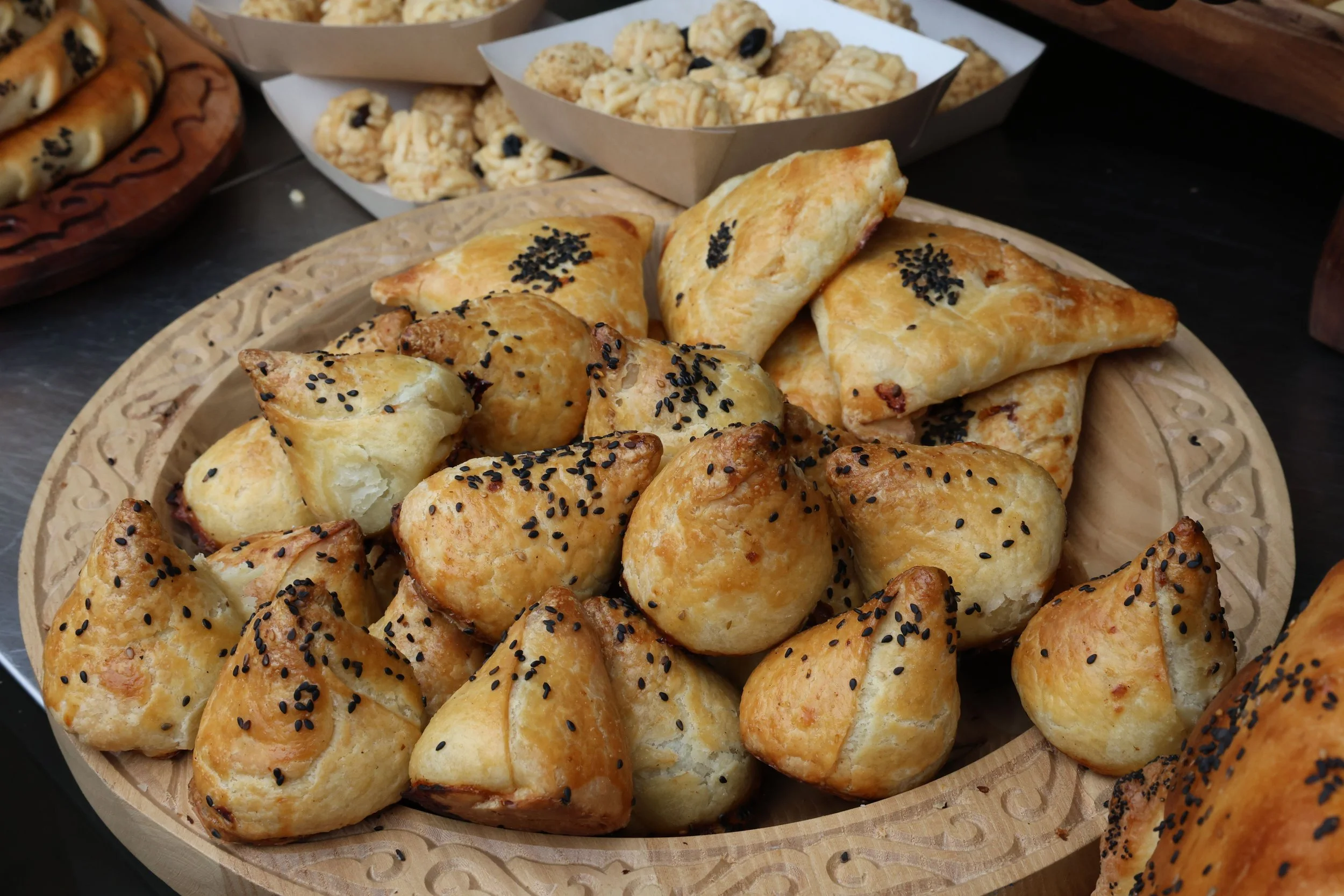
Samsa: baked savoury pastries, commonly filled with meat and onion, with other fillings available in some places.
Bread is an important part of hospitality, rather than simply something served alongside the main course.
Boorsok are small pieces of fried dough, often put out with tea, preserves or dairy accompaniments. Nan, also called lepeshka on some menus, is a round bread commonly baked in a tandyr oven.
You may also come across:
Kaymak: a rich cream served with bread and other foods.
Kurut: small, dried cultured-dairy balls with a salty, tangy flavour.
Kattama: a layered flatbread, with recipes and fillings that vary.
Treat bread respectfully and avoid wasting it. At a shared table, follow your host’s lead when taking or breaking pieces.
-
Tea is a big part of welcoming guests. You’ll encounter both black and green tea, sometimes served with milk. Ask for it without milk if needed.
Other drinks include:
Kymyz — кымыз: fermented mare’s milk with a sour taste. Fermentation produces alcohol, so it should not be treated as alcohol-free.
Ayran: a fermented dairy drink.
Chalap: a savoury dairy-based drink made with water and salt.
Maksym: a grain-based drink with a tangy flavour.
Bozo: a fermented grain drink that contains alcohol.
Grain-based does not always mean vegan. For example, Shoro’s published maksym ingredients include clarified butter. Check the recipe or label rather than assuming.
If you avoid alcohol or dairy, explain this before accepting an unfamiliar drink. You don’t need to try something simply because it is traditional.
-
You don’t need to know every custom before arriving. Paying attention and asking politely goes a long way.
Ask permission before photographing people, especially children.
Check before filming inside a home, workshop or religious site.
Dress appropriately for the place you’re visiting.
Follow local guidance about shoes and head coverings at religious sites.
Ask before entering a yurt or walking through a family’s working space.
Agree on payment before a demonstration, meal or organised activity.
A family’s home and daily work are not automatically a tourist attraction. Give people the choice to welcome you, speak with you or be photographed.
My advice is to arrive curious, explain your needs kindly and leave time for conversation.
Hospitality is important here, and you may be offered more food or tea than you expected.
A few simple habits help:
Greet your hosts when you arrive.
Remove your shoes when entering a home, unless invited to keep them on. Follow your host’s lead in a yurt.
Wait to be shown where to sit; some places are reserved for elders or honoured guests.
Treat shared food and bread with care.
Thank your host, even if you need to decline something.
You can politely refuse food or alcohol. A warm explanation is better than forcing yourself to eat something that conflicts with your diet or health needs.
There isn’t one set of customs followed identically in every household. If you’re unsure, ask.
Kyrgyzstan’s culture includes city life, different communities and traditions that continue to evolve. It isn’t only about yurts and horses.
Experiences to look for include:
Felt-making workshops: learn about shyrdak and ala-kiyiz, traditional felt carpets.
Music: hear the komuz, a three-stringed instrument.
Epic storytelling: learn about Manas and the tradition of oral performance.
Yurt-making or assembly demonstrations: see the skills behind the wooden frame, felt coverings and decoration.
Cooking sessions and family meals: learn how a dish is prepared and speak with the people making it.
Book through hosts or organisers who can explain what is included and pay the people providing the experience.
For animal-based activities, ask what actually happens before booking. Eagle demonstrations may involve live prey, and traditional kok-boru uses a goat carcass, although some versions use a substitute. Choose experiences that fit your own comfort and values.
-
Yes, but it helps to be specific. Saying “no meat” may not communicate that you also avoid meat stock, animal fat, chicken and fish.
Possible options include:
Vegetable-filled manty or oromo.
Potato-filled dumplings or pastries.
Vegetarian lagman made with a meat-free sauce.
Lentil or vegetable soup made without meat stock.
Eggs, porridge and dairy foods, if you eat them.
Rice, potatoes, beans and vegetables prepared without meat or animal fat.
These are options to ask about, not dishes guaranteed to be vegetarian everywhere.
Tell guesthouses and tour operators before you arrive. Ask for a freshly prepared meat-free meal rather than simply having the meat removed from a finished dish.
-
Yes, with more advance planning—especially outside the main towns.
Dairy is common, and a vegetarian alternative may be made with eggs, butter, cream or milk. Explain the ingredients you avoid rather than relying only on the word “vegan”.
Things to check include:
Milk or butter in porridge and mashed potatoes.
Egg in noodles, pastry or toppings.
Meat stock in vegetable soups and sauces.
Animal fat in rice, dumplings or bread.
Cream, yoghurt or mayonnaise added when serving.
Honey in drinks, breakfasts or desserts.
Ask about meals built around beans, lentils, rice, potatoes, vegetables and suitable bread. For longer treks, agree on filling meals and protein sources in advance.
Bring useful backup food, such as nuts, nut butter, dried fruit or suitable snack bars. These should support your meals, rather than replace proper catering throughout a trek.
Plant-based milk and specialist products should be arranged or bought in town; don’t expect a remote yurt camp to have them.
-
My advice is to send a short written message before booking, then confirm it again with your guide and host.
For a vegetarian diet
“I don’t eat meat, chicken or fish, including meat stock and animal fat. I do eat eggs and dairy.”
Adjust the final sentence to match what you eat.
For a vegan diet
“I don’t eat meat, chicken, fish, eggs, dairy or honey. Please also avoid meat stock, animal fat, butter, cream and yoghurt. Can you prepare meals using vegetable oil?”
Ask your guide to translate the message into Kyrgyz or Russian and share it with each accommodation provider.
A dish name or photograph won’t tell you everything about its ingredients. If you’re unsure, ask how it is made.
-
An allergy needs a separate conversation from a preference.
If you have a serious allergy, explain the ingredient and the risk from shared utensils, surfaces or cooking oil. Ask your operator to confirm what each kitchen can safely provide before booking.
Carry a professionally translated allergy card and your prescribed emergency medication. If a kitchen cannot confirm ingredients or prevent cross-contact, don’t assume the meal is safe.
Gluten-free food
Wheat is common in bread, noodles and dumplings. Some grain drinks also contain wheat or barley. Rice or potato dishes still need checking for sauces, seasonings and shared preparation.
